
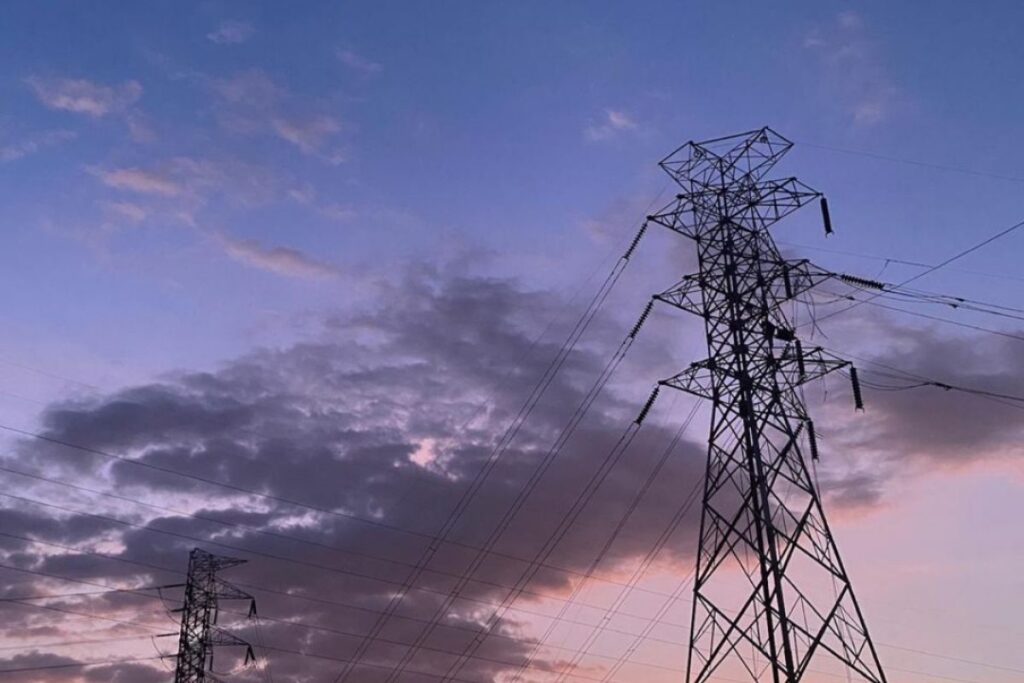
Overhead transmission lines use many different types of hardware, but two of the most important are Suspension Clamps and Tension Clamps. For transmission line projects in Indonesia, overhead line hardware should be selected and installed in accordance with the applicable SPLN (State Electricity Company Standards), relevant IEC standards, approved engineering drawings, and project technical specifications. Selecting the correct clamp is essential to ensure long-term safety, reliability, and performance of the transmission line.
Although Suspension Clamps and Tension Clamps may appear similar, they perform completely different mechanical functions. Understanding these differences helps engineers, contractors, utilities, and procurement teams choose the right hardware for every transmission line application.
This guide explains the difference in a simple and practical way.
What is a Suspension Clamp?
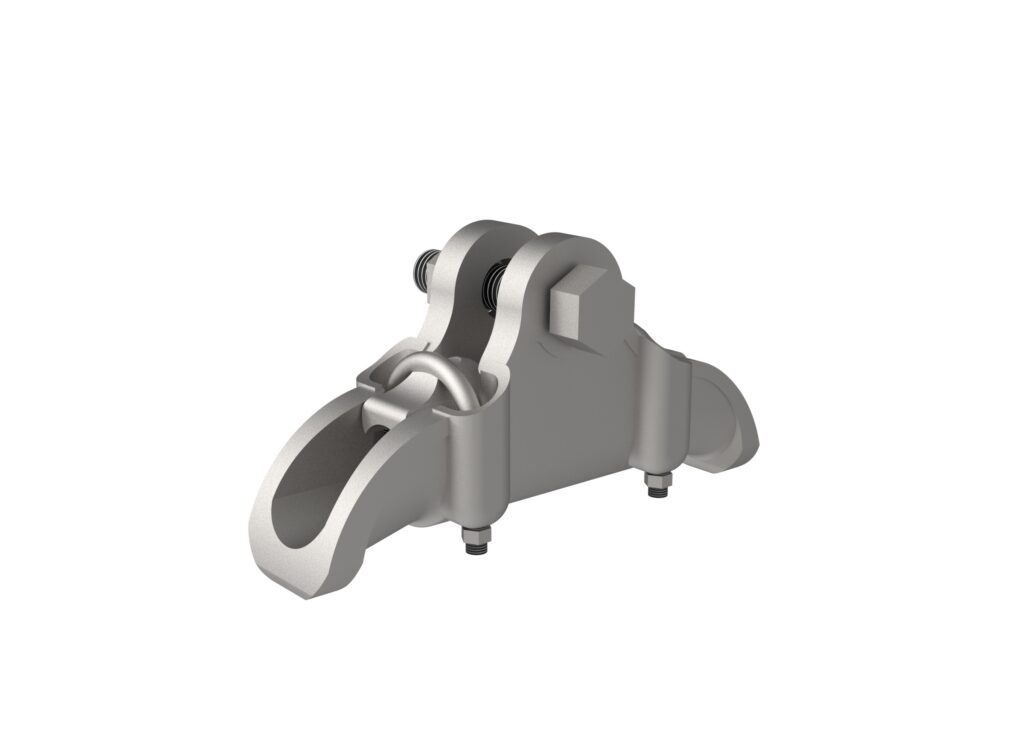
A Suspension Clamp is used to support the conductor on Suspension (Tangent) Towers. Its main purpose is to carry the weight of the conductor while allowing limited movement caused by wind, temperature changes, and normal line vibration.
Main Functions
- Supports the vertical weight of the conductor.
- Holds the conductor securely without damaging its surface.
- Allows limited conductor movement to reduce mechanical stress.
- Helps minimize vibration and extends conductor service life.
Where is it Used?
Suspension Clamps are commonly installed on:
- Suspension (Tangent) Towers
- Straight transmission line sections
- Small line deviation angles, depending on the transmission line design and project specifications
They are designed to support the conductor but are not intended to withstand the full tensile force of the transmission line.
What is a Tension Clamp?
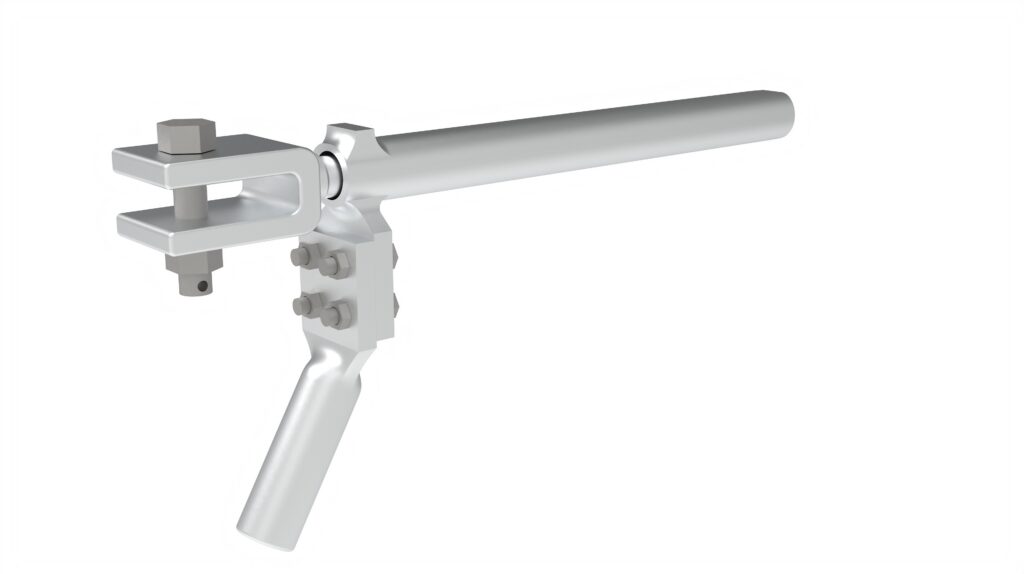
A Tension Clamp, also known as a Dead-End Clamp or Strain Clamp, is used to anchor the conductor and withstand the full tensile load of the transmission line. Unlike a Suspension Clamp, a Tension Clamp firmly grips the conductor to prevent slippage under the designed mechanical load.
Main Functions
- Withstands the horizontal tensile force of the conductor.
- Anchors the conductor securely.
- Maintains conductor tension according to the transmission line design.
- Prevents conductor slippage during normal operation.
Where is it Used?
Tension Clamps are commonly installed on:
- Dead-End Towers
- Anchor Towers
- Angle Towers
- Section Towers
- Terminal Towers
These locations are subjected to high mechanical tension and therefore require hardware with high mechanical strength.
Suspension Clamp vs Tension Clamp
| Suspension Clamp | Tension Clamp |
| Supports conductor weight | Resists conductor tensile force |
| Carries vertical load | Carries horizontal tensile load |
| Allows limited conductor movement | Firmly anchors the conductor |
| Used on Suspension (Tangent) Towers | Used on Dead-End, Anchor, Angle, Section, and Terminal Towers |
| Reduces vibration and bending stress | Reduces vibration and bending stress |
Why Choosing the Correct Clamp is Important
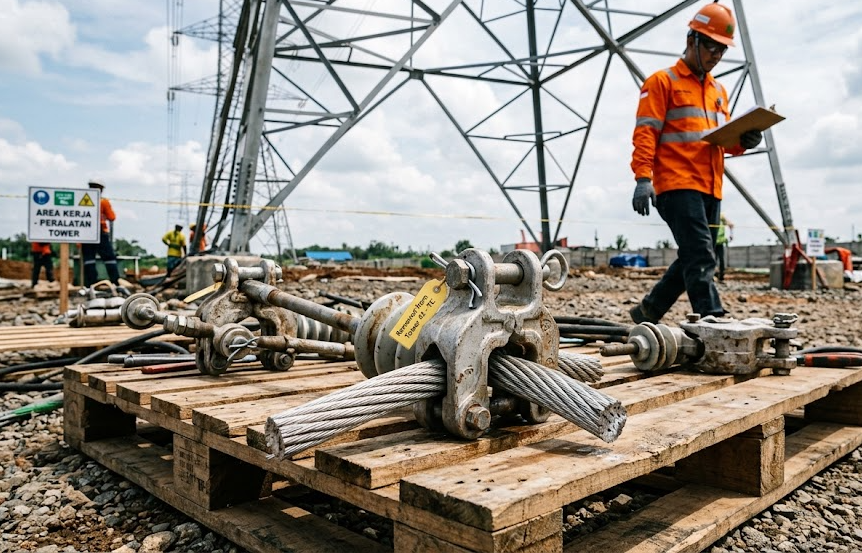
Using the wrong clamp may lead to:
- Conductor slippage
- Excessive conductor sag
- Hardware damage
- Increased mechanical stress
- Reduced transmission line reliability
- Higher maintenance costs
For this reason, transmission line hardware should always be selected according to the transmission line design, applicable engineering standards, utility specifications, and project requirements.
Quality Matters
Transmission line fittings operate outdoors for decades under exposure to wind, rain, UV radiation, pollution, and changing temperatures.
High-quality Suspension Clamps and Tension Clamps are typically manufactured from high-strength aluminum alloy and hot-dip galvanized steel to provide excellent mechanical strength, corrosion resistance, and long-term reliability.
At PT HOGN Trans Jaya, we are committed to manufacturing high-quality transmission line fittings that meet customer technical and performance requirements. Our products are designed using internationally recognized engineering practices and, where applicable, with reference to standards such as IEC 61284 for overhead line fittings, while supporting the technical requirements commonly specified in Indonesian transmission line projects.
Selecting transmission line hardware that complies with applicable engineering standards and project specifications helps improve system safety, reduce maintenance requirements, and ensure reliable long-term performance under various environmental conditions.
Read More :
PT HOGN Trans Jaya is a trusted manufacturer of high-quality transmission line hardware for overhead power transmission systems. Our product portfolio includes Suspension Clamps, Tension Clamps, Dead-End Clamps, Armor Rods, Vibration Dampers, Spacer Dampers, OPGW Accessories, and a wide range of other transmission line fittings manufactured under strict quality control.
Whether your project involves new transmission line construction, system expansion, or maintenance, PT HOGN Trans Jaya is committed to delivering durable, reliable, and high-performance solutions that support the long-term safety and efficiency of power transmission networks.
