
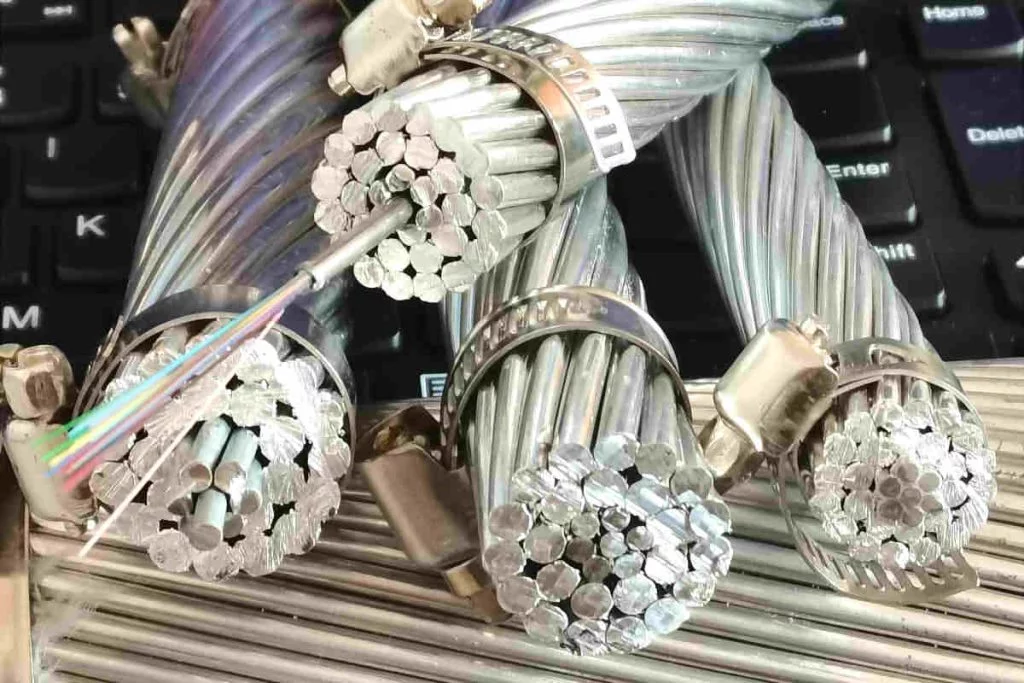
In the modern electrical infrastructure world, the reliability and safety of high-voltage transmission networks (SUTT/SUTET) are top priorities. Distributing massive power across hundreds or even thousands of kilometers is not without risks. One of the greatest threats faced by transmission towers and conductor cables in the open is lightning strikes.
To protect the electrical network from extreme weather disruptions and lightning strikes, electrical engineers rely on crucial components installed at the highest point of transmission towers. Two main technologies often discussed in this protective function are Earthwire (Ground Wire) and its successor innovation, OPGW (Optical Ground Wire).
Although at first glance they appear to be in the same position and have similar basic functions, there are highly significant technological differences between the two. This article will discuss in depth what OPGW and Earthwire are, their differences, and why choosing the right supporting hardware is vital for transmission network reliability.
Understanding the Core Cables
Before diving into the hardware, it is essential to establish the distinct roles of the cables they support.
What is an Earthwire?
Earthwire, often referred to as overhead ground wire (OHGW) or ground wire, is a protective cable strung across electrical transmission towers and installed at the topmost position (tower peak).
The primary function of the Earthwire is as a shield or lightning rod. When a thunderstorm occurs, the Earthwire will “catch” the lightning strike before it hits the phase conductor cables carrying the electrical current below. After receiving a lightning strike, this wire will immediately channel the high-voltage current safely to the ground (grounding) through the transmission tower structure.
Materially, conventional Earthwire is usually made of Galvanized Steel Wire (GSW) strands. This material is chosen for its very high mechanical strength to withstand the tensile load between towers, as well as its resistance to corrosion in the open air.
What is OPGW (Optical Ground Wire)?
As industry needs and smart grid technologies evolve, power utility companies require not only lightning protection but also fast, secure, and large-capacity data communication lines. This is where OPGW (Optical Ground Wire) comes in as a revolutionary solution.
OPGW is a hybrid cable that combines two functions at once in a single physical form:
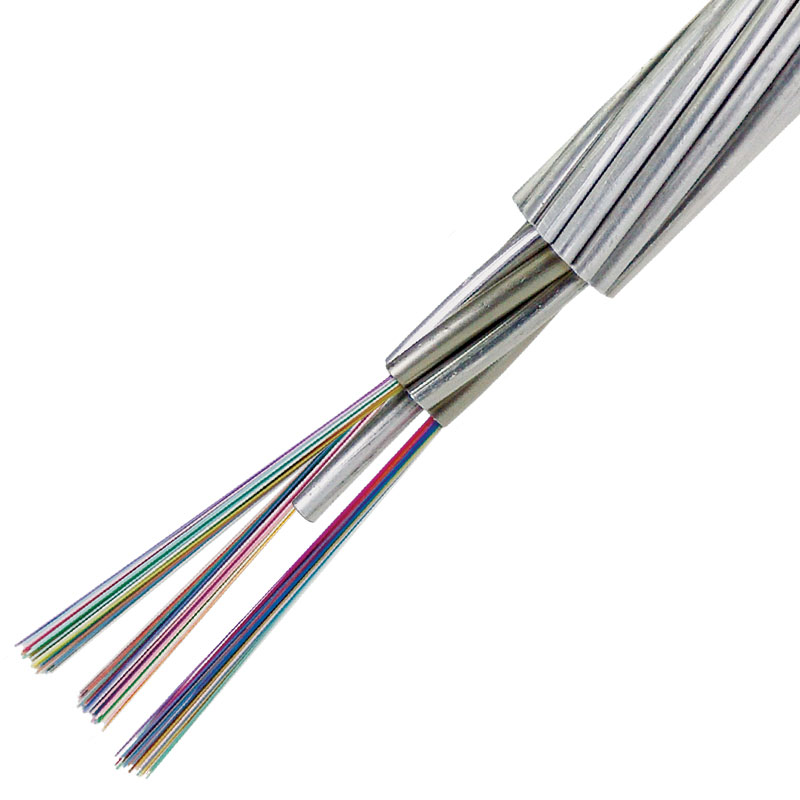
- Electrical Protection (Grounding): The outer part of OPGW is made of stranded aluminum-clad steel or aluminum alloy wires, which function exactly the same as conventional Earthwire, protecting the transmission line from lightning strikes and short circuits.
- Telecommunication Data Transmission (Fiber Optic): At the core of the OPGW cable, there is a protective tube containing fiber optics. These optical fibers are used to transmit voice, video, and high-speed information data.
The fiber optic communication line within the OPGW is vital for SCADA (Supervisory Control and Data Acquisition) systems, protection relays, real-time network monitoring, and can even be leased to Internet Service Providers (ISPs) as a telecommunications backbone.
Main Differences Between OPGW and Conventional Earthwire
To facilitate understanding when planning electrical infrastructure projects, here are some striking differences between OPGW and Earthwire:
1. Functionality
The most fundamental difference lies in their functions. Conventional Earthwire has a single-purpose function as a mechanical protector and lightning rod. Meanwhile, OPGW carries a dual-purpose function that not only repels lightning but also serves as the backbone for high-speed data telecommunications.
2. Resistance to Electromagnetic Interference (EMI)
Because transmission towers carry extra-high voltage electricity, the surrounding area has a very strong electromagnetic field. If ordinary copper communication cables are used, the data will be corrupted due to electromagnetic interference (EMI). However, because the core of OPGW uses fiber optics (special glass/plastic), the data transmission inside is 100% immune to electromagnetic interference.
3. Material Structure
Earthwire purely uses solid stranded metals (steel/aluminum). OPGW is much more complex; it has a stainless steel or aluminum tube in the center to protect the highly fragile glass fiber optic strands from breaking or being compressed when the cable is pulled across the towers.
4. Investment Value and ROI (Return on Investment)
The procurement and installation costs of OPGW are indeed higher than conventional Earthwire. However, OPGW provides an exceptional return on investment. Utility companies no longer need to build separate telecommunication poles, and they can even generate additional revenue by leasing unused fiber optic bandwidth to third-party telecommunication companies.
Read More :
Critical Supporting Components in OPGW & Earthwire Installation
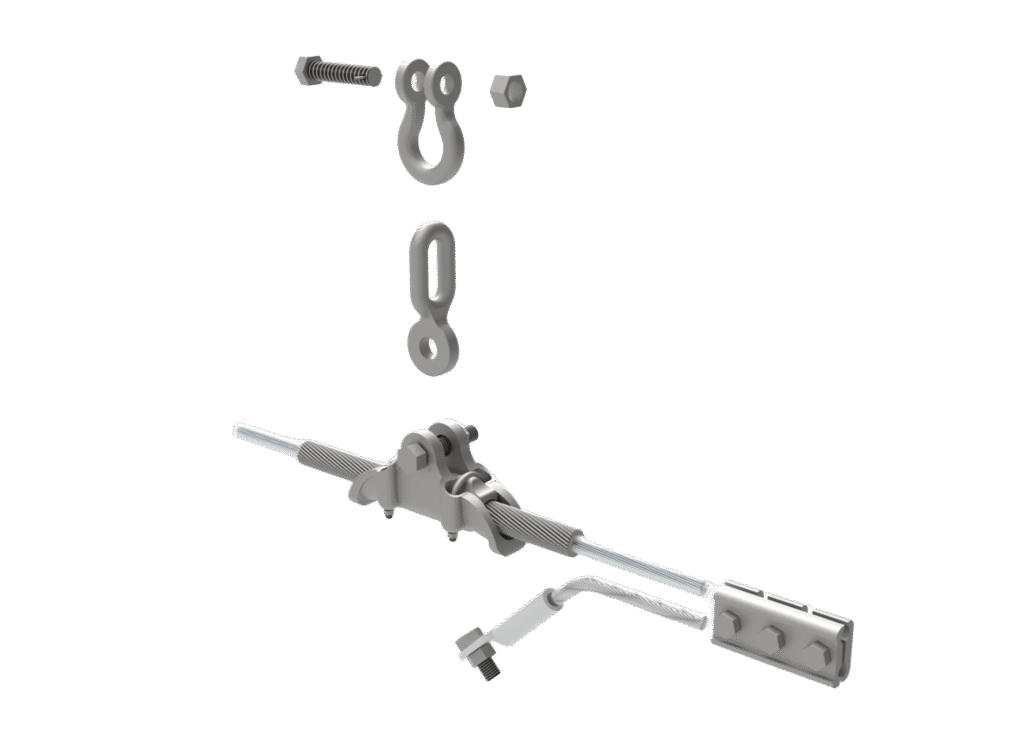
No matter how good the quality of the OPGW or Earthwire cable used, the transmission system cannot stand without the supporting hardware installed on each tower. Considering these cables must withstand tremendous mechanical loads, strong winds, and resonance vibrations, the selection of fitting accessories must not be arbitrary.
Some of the essential accessories absolutely needed include:
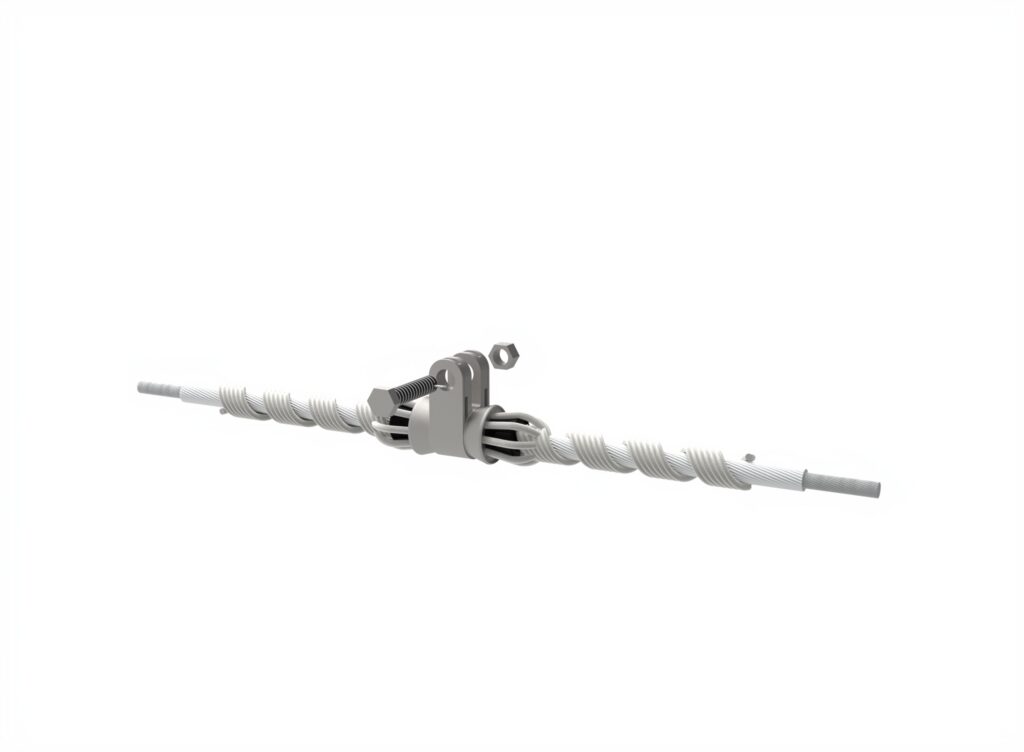
- Tension Clamp (Dead-end Assembly): This hardware is used on angle towers (tension towers) to hold and withstand the maximum pulling load of OPGW or Earthwire cables without damaging their fiber optic core.
- Suspension Clamp: Used on straight towers (suspension towers) to support, suspend, and protect the cable from excessive bending stress caused by the cable’s own weight and wind gusts.
- Vibration Damper: In highlands or open areas, the wind can cause the cable to vibrate at high frequencies (Aeolian vibration). If left unchecked, these vibrations will break the optical fibers inside the OPGW or cause material fatigue in the Earthwire. Vibration dampers are installed near the support points to dampen and absorb this vibration energy.
- Joint Box (Splice Enclosure): Specifically for OPGW, this is a weatherproof protective box used at joint towers to splice the glass fiber optic ends of two different cable drums.
Conclusion
Electrical infrastructure continues to evolve towards smarter, integrated, and more efficient systems. The transition from conventional Earthwire to OPGW is the new standard in modernizing electrical transmission networks (SUTT/SUTET) worldwide. The use of OPGW not only secures the power supply from natural disturbances but also ensures the smooth flow of information essential for future grid control.
However, installing and maintaining high-voltage transmission lines require uncompromising quality assurance, from the cable itself to the fitting components and accessories supporting it. Substandard components can lead to network failures costing billions of rupiah.
Ready to Build Reliable Electrical Transmission Infrastructure With Us?
The success of your high-voltage transmission project heavily depends on the quality of materials and fitting accessories used. PT HOGN TRANS JAYA is here as your strategic partner, providing electrical transmission hardware solutions, including accessories for conductor installations, OPGW, and electrical network protection infrastructure with the best industry standards.
Let’s realize a safe, efficient, and highly durable electrical project. Visit our official website at hogntransjaya.com to explore our product catalogs, technical information, and solution portfolio.
For those of you who need procurement consultations, price quotes, or are interested in establishing long-term business cooperation with us, do not hesitate to contact our professional team via email at [email protected]. We are ready to support the success of your infrastructure!
