
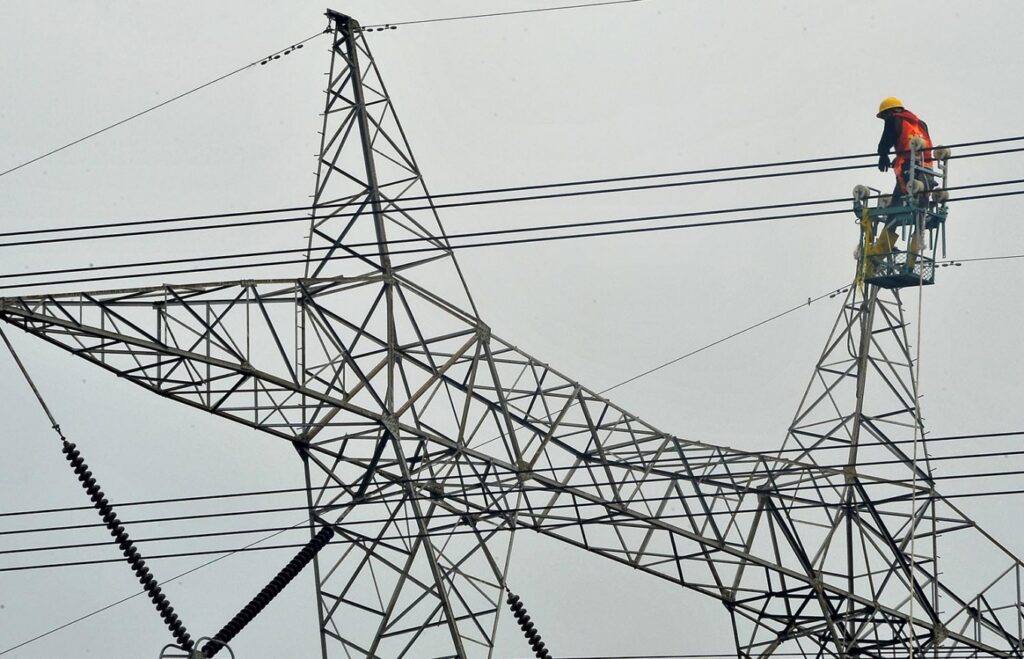
Indonesia, as an archipelagic country with rapid economic growth, continues to spur the development of electrical infrastructure to meet industrial and public needs. In every electrical megaproject from High Voltage Overhead Lines (SUTT) to Extra High Voltage Overhead Lines (SUTET) there is one crucial element that often escapes public attention, yet plays the most vital role in maintaining grid reliability. That element is transmission line fittings or transmission network accessories.
Selecting and installing the right fittings is not merely a matter of assembling metal components. More than that, it is about compliance with strict safety standards. In Indonesia, the application of transmission line fittings standards is regulated to ensure that every electrical flow can be distributed safely, efficiently, and without interruption.
This article will comprehensively discuss what transmission line fittings are, why standardization is so important, and how regulations in Indonesia govern the specifications of these components so they can withstand extreme geographical challenges.
What Are Transmission Line Fittings?
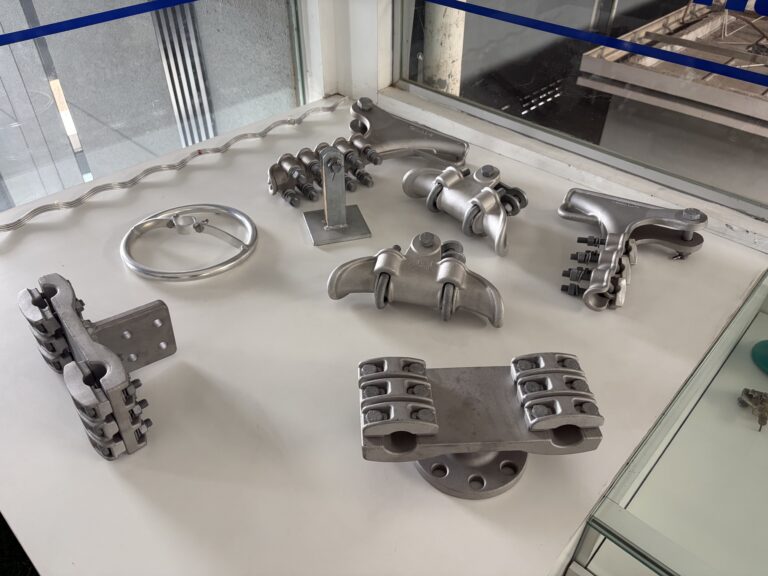
Simply put, transmission line fittings are a set of mechanical hardware used to connect, support, and protect conductors (electrical cables) and insulators on transmission towers. Without these components, high-voltage cables would not be able to span securely from one tower to another.
Some of the main types of components included in this category are:
- Tension Clamps: Function to withstand the mechanical tension of the conductor on dead-end towers or angle towers.
- Suspension Clamps: Used on suspension towers to support the weight of the conductor.
- Vibration Dampers: Vital devices installed on conductors to dampen Aeolian vibrations (vibrations caused by wind blowing) which can cause metal fatigue.
- Yoke Plates & Link Fittings: Connecting plates used to assemble multiple insulator sets and distribute loads evenly.
Why Are Transmission Component Standards Crucial?
The electrical transmission network operates under extremely harsh conditions. These components not only carry electrical voltages ranging from tens to hundreds of kiloVolts (kV), but must also bear exceptionally heavy mechanical loads. Tensile loads from the cables, strong wind gusts, heavy rainfall, and drastic temperature changes are a daily occurrence for this infrastructure.
If a fitting is manufactured below standard, the risks faced are fatal. A mechanical failure in just one clamp can cause the conductor to snap, triggering large-scale power outages (blackouts), damaging other infrastructure, and even threatening human lives in the vicinity. Therefore, standardization is not just an administrative formality, but a guarantee of operational reliability and safety.
Standards for Transmission Line Fittings in Indonesia
In Indonesia, the procurement and installation of transmission accessories rely heavily on regulations established by national energy authorities and international electrical guidelines. There are three main pillars of standards that serve as references:
1. State Electricity Company Standards (SPLN)
As the primary mandate holder for electricity in Indonesia, PT PLN (Persero) has very strict internal standards known as SPLN. These standards are formulated taking into account the specific climatic, geographical, and operational conditions in Indonesia. Every fitting component, from physical dimensions, tensile strength, to heat resistance, must pass certification tests from testing laboratories designated by PLN (such as LMK/Puslitbang PLN).
2. Indonesian National Standards (SNI)
For the base materials used in manufacturing fittings—such as steel, aluminum, or cast iron types—SNI provides specific regulations regarding chemical composition and mechanical feasibility. Compliance with SNI guarantees that the raw materials used are not low-quality recycled goods prone to breaking.
3. International Standards (IEC & ISO)
Technically, many SPLN guidelines are adopted from or aligned with standards from the International Electrotechnical Commission (IEC), such as IEC 61284 which governs specifications and testing for overhead line fittings. In addition, manufacturing and metal coating processes must also refer to the ISO 1461 standard for the Hot-Dip Galvanizing process.
Addressing Indonesia’s Tropical Climate Challenges
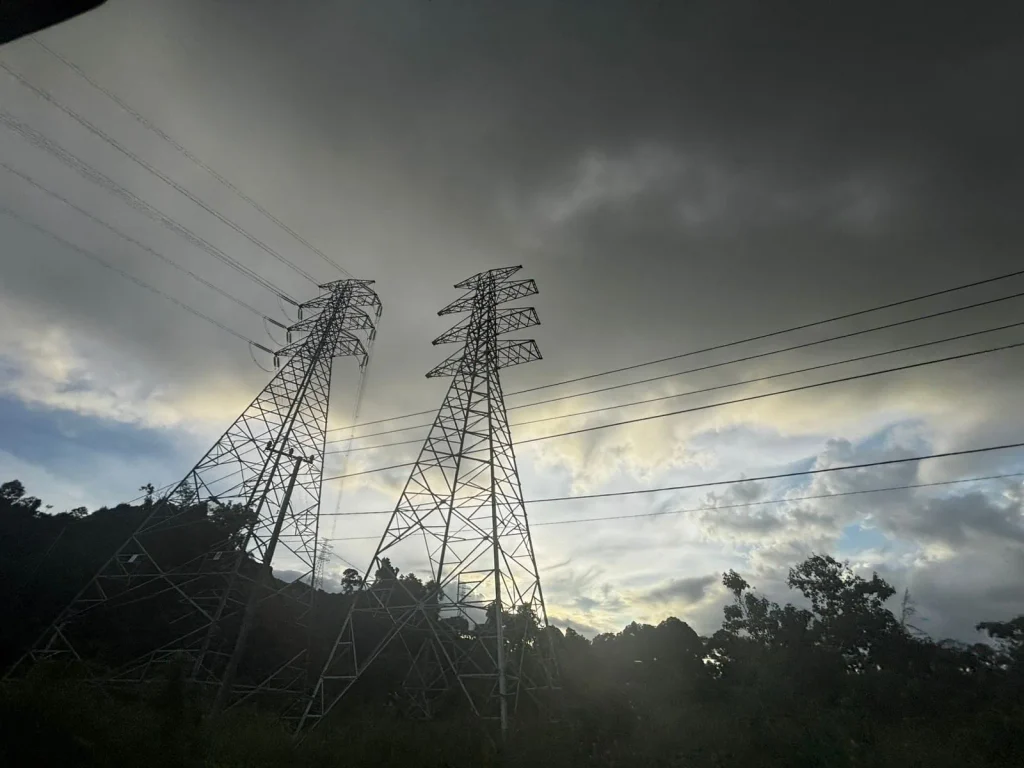
One thing that makes transmission grid standards in Indonesia so unique and challenging is the geographical factor. Indonesia is a tropical country with very high humidity levels. Moreover, as an archipelagic nation, many electrical transmission towers are built in coastal areas.
These conditions create a highly corrosive environment. Salt-laden air in coastal areas can destroy pure steel in just a matter of months. Therefore, standards in Indonesia require all iron or steel-based transmission line fittings to undergo a Hot-Dip Galvanizing (HDG) process with a specific zinc coating thickness. This coating acts as a sacrificial anode that will protect the core steel from rust, ensuring the fittings can operate optimally for decades without premature replacement.
Non-Negotiable Quality Parameters
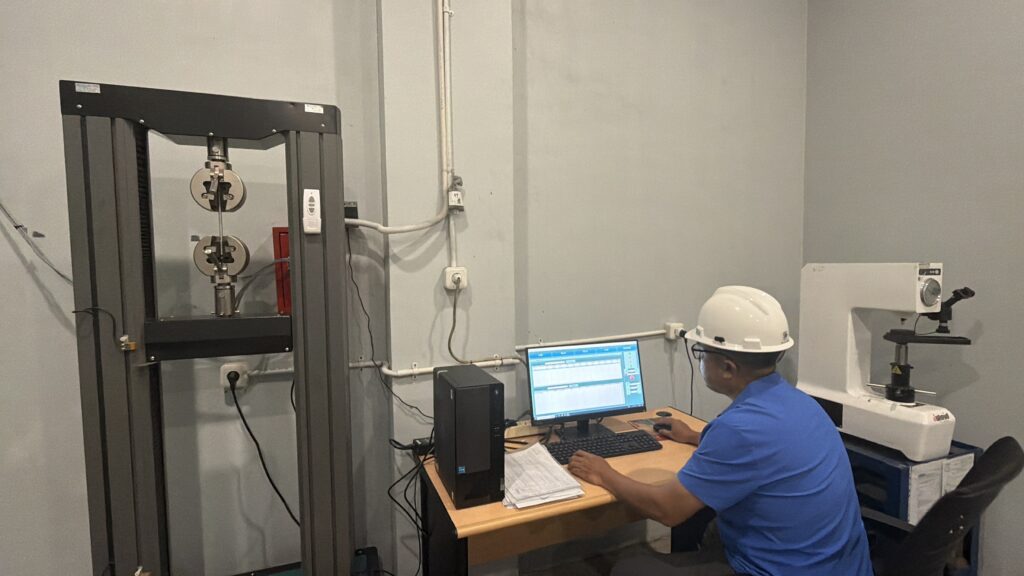
When choosing transmission fittings, several laboratory testing parameters required by Indonesian standards include:
- Mechanical Failing Load Test: Testing to ensure the fittings will not break or deform when pulled beyond their maximum operational load.
- Electrical Resistance Test: Components must not obstruct electrical flow or create power loss, and must be designed to minimize the corona effect (noisy and destructive sparks).
- Slip Test: Specifically for tension clamps, the conductor must not shift or slip even slightly when pulled under a certain tension.
Partnering with a Trusted Transmission Line Fittings Provider
Building an electrical grid is a long-term investment. Mistakes in choosing a transmission network accessories supplier can lead to ballooning maintenance costs and potential penalties due to system downtime. Therefore, EPC (Engineering, Procurement, and Construction) contractors and infrastructure developers must always ensure that the materials they use are sourced from manufacturers and distributors who have obtained complete certifications.
This is where PT HOGN TRANS JAYA steps in as your strategic solution. As a company fully focused on providing high-quality electrical transmission and distribution network components, we are committed to only delivering products whose durability has been proven and which meet the electrical standards applicable in Indonesia. From tension clamps, suspension clamps, vibration dampers, to all other SUTT/SUTET accessories, our products are designed to face even the toughest infrastructure challenges.
Make your electrical project a reliable, safe, and long-lasting infrastructure legacy with us.
Let’s realize energy reliability together with PT HOGN TRANS JAYA.
To explore our full product catalog and see how our solutions can support the success of your project, please visit our official website at hogntransjaya.com.
If you require technical consultation, price quotations, or wish to establish cooperation in material procurement for your electrical project, do not hesitate to contact our expert team via email at [email protected]. We are ready to be your best strategic partner!
