In today’s modern era, the availability of a stable and continuous electrical energy supply is no longer a luxury, but a primary necessity for both industries and households. To distribute electricity from power plants to consumers, a robust transmission and distribution network infrastructure is required. One of the most crucial elements although often overlooked by the general public is overhead line hardware.
Considering that these networks are directly exposed to extreme weather, strong winds, high mechanical loads, and extra-high voltage electricity, the components used cannot be chosen arbitrarily. This is where the IEC (International Electrotechnical Commission) Standard plays a vital role. This article will thoroughly explore why the IEC standard is highly important for overhead line hardware, what the main applicable standards are, and the impact of their use on the reliability of the electrical system.
What is the IEC Standard in Overhead Line Hardware?
The International Electrotechnical Commission (IEC) is a leading global organization that prepares and publishes international standards for all electrical, electronic, and related technologies. In the context of electrical transmission networks, the IEC standard serves as a universal guidebook that sets design parameters, material quality, and rigorous testing procedures for every network component.
Overhead line hardware itself includes various types of fittings that hold, connect, and protect conductors on transmission towers. These components include tension clamps, suspension clamps, yoke plates, vibration dampers, splices, and various other protective hardware. The IEC standard ensures that hardware produced in one country has equivalent quality, safety, and compatibility when used in another country.
Why is Compliance with IEC Standards So Important?
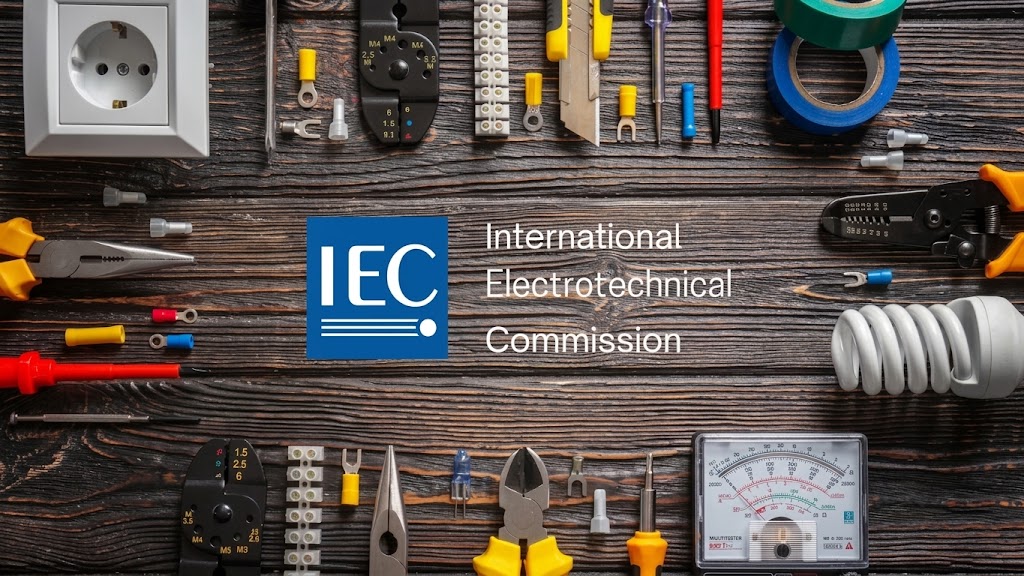
The use of overhead line hardware that complies with IEC standards provides a number of strategic and operational benefits that cannot be ignored by electrical contractors or energy providers (such as PLN in Indonesia):
- High-Level Safety
Mechanical failures in high-voltage networks can be fatal. Broken cables or shattered fittings can endanger the lives of field workers and surrounding communities. The IEC standard requires each component to pass extreme mechanical load tests to ensure it will not fail under maximum operational stress. - Resistance to Environmental Conditions
Transmission hardware remains outdoors for decades. These components must withstand corrosion from acid rain, industrial air pollution, high humidity, and temperature fluctuations. The IEC sets standards for galvanizing thickness (hot-dip galvanizing) and coating materials to prevent rust. - Reducing Corona and Radio Interference Risks
In extra-high voltage networks (SUTET/SUTT), poorly designed hardware can trigger the corona effect—a detrimental discharge of electricity into the air. The IEC standard requires corona and Radio Interference Voltage (RIV) testing so that hardware has a smooth angular design and does not cause frequency interference around transmission lines. - Interoperability and Global Standardization
By following IEC standards, components from various manufacturers can be combined seamlessly. This greatly facilitates the procurement and maintenance teams in finding precise spare parts.
Key IEC Standards for Transmission Network Components
For electrical engineers and digital marketing professionals in the electrical manufacturing industry, understanding these standard series is very useful for evaluating product specifications. Here are some of the most important IEC standards related to overhead line hardware:
1. IEC 61284: Overhead Lines – Requirements and Tests for Fittings
This is the main “holy grail” for overhead line hardware. This standard sets out general requirements and test methods for overhead network hardware. The eligibility of components such as suspension clamps and tension clamps is tested through this standard. Testing includes:
- Tensile Test: Ensuring the component can withstand the pull load of the conductor without permanent deformation.
- Slip Test: Ensuring the clamp’s grip on the cable does not slip at a certain tension.
- Thermal and Electrical Tests: Specifically for current-carrying components, this test ensures the fitting does not experience overheating that could melt the conductor.
2. IEC 61897: Overhead Lines – Requirements and Tests for Stockbridge Dampers
Vibration dampers play a very critical role in absorbing aeolian vibrations caused by the wind. Without a good damper, the conductor can break due to metal fatigue. The IEC 61897 standard ensures the damper has the correct resonant frequency and resists mechanical fatigue for up to millions of vibration cycles.
3. Other Supporting Standards
In addition to fittings, there are other closely related devices, such as glass or porcelain insulators regulated in IEC 60383, as well as standards for anti-rust coating thickness which often refer to ISO standards globally recognized in the electrical ecosystem.
The Impact of Ignoring IEC Standards: Multiplied Losses

Choosing hardware that lacks international standard certification may seem profitable at first due to its lower price. However, the hidden costs of component failure far exceed the initial savings.
Damage to a single low-quality tension clamp can cause the conductor to fall. This triggers a blackout (mass power outage), damage to substation infrastructure, fines from the government, and massive emergency repair costs. In national-scale electrical projects, compromising on hardware quality is not an option.
More Articles :
Build the Future Network with PT HOGN TRANS JAYA
Understanding technical specifications and ensuring that the hardware you buy complies with IEC Standards is the first step toward building a reliable, safe, and durable electrical infrastructure. To achieve this, you need a manufacturing and supply partner with credibility, a clear track record, and a full commitment to international quality.
As an experienced company in supplying electrical network components, PT HOGN TRANS JAYA provides various high-quality overhead line hardware needs that have met rigorous testing standards. We are ready to support the smooth running of your electricity transmission and distribution projects with precision products, ranging from tension clamps, yoke plates, to vibration dampers.
Let’s ensure every electrical project of yours uses the best components that meet global standards. Please visit our website at hogntransjaya.com to view our complete product catalog and electrical solutions.
For technical consultations, price quotation requests, and those who want to collaborate with us, our team is ready to help you. Do not hesitate to contact us via email at [email protected]. Let’s realize a stronger and more reliable energy infrastructure together with PT HOGN TRANS JAYA!
