
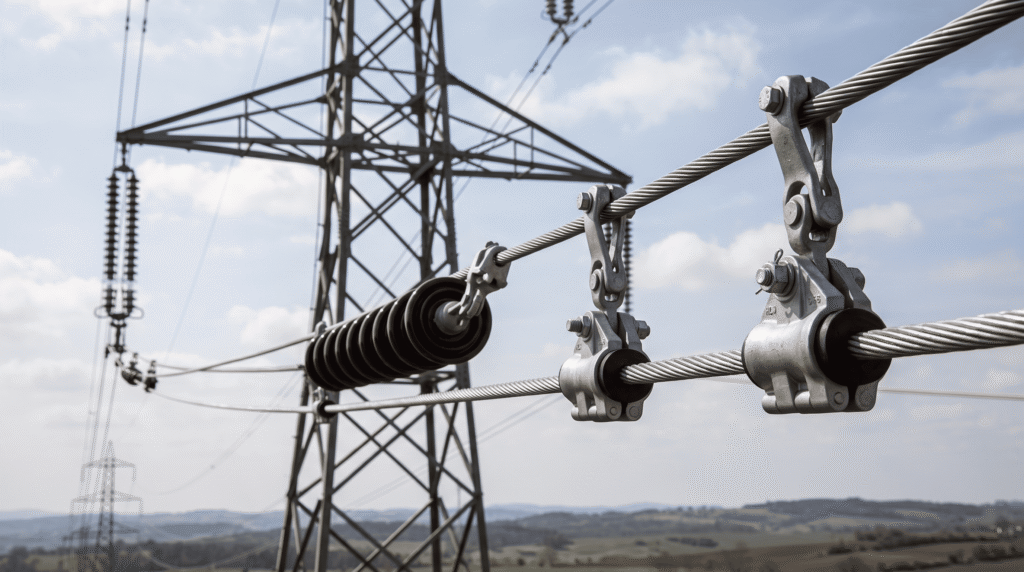
As infrastructure continues to expand globally, the reliability of electrical transmission networks becomes more critical than ever. At the heart of these vast, spanning power grids are numerous intricate components, each playing a vital role. One such indispensable piece of hardware is the Suspension Clamp. Often overlooked by the untrained eye, this component is the unsung hero of overhead power distribution. Whether you are an engineer, a project manager, or an infrastructure enthusiast, understanding the detailed product specifications, functions, and benefits of suspension clamps is essential for maintaining a robust and long-lasting electrical network.
What is a Suspension Clamp?
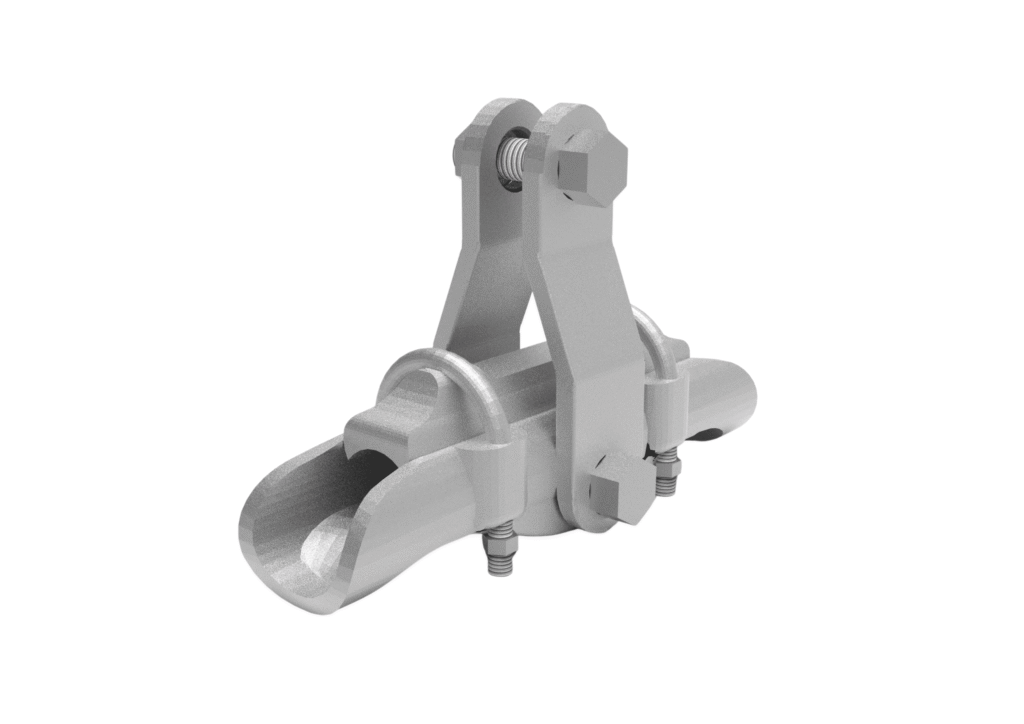
A suspension clamp is a highly specialized piece of pole-line hardware designed to suspend and support electrical conductors or cables from transmission towers and utility poles. Unlike tension or dead-end clamps that hold conductors tightly at the very end of a line, suspension clamps are utilized on straight-line towers (also known as suspension towers) where the cable passes through continuously.
Their primary objective is to hold the vertical weight of the conductor safely while allowing for a slight degree of movement to accommodate environmental stresses. By effectively cradling the cable, suspension clamps prevent excessive sagging and protect the transmission lines from the damaging effects of wind-induced vibrations, extreme weather fluctuations, and long-term mechanical fatigue.
The Anatomy of a High-Quality Suspension Clamp
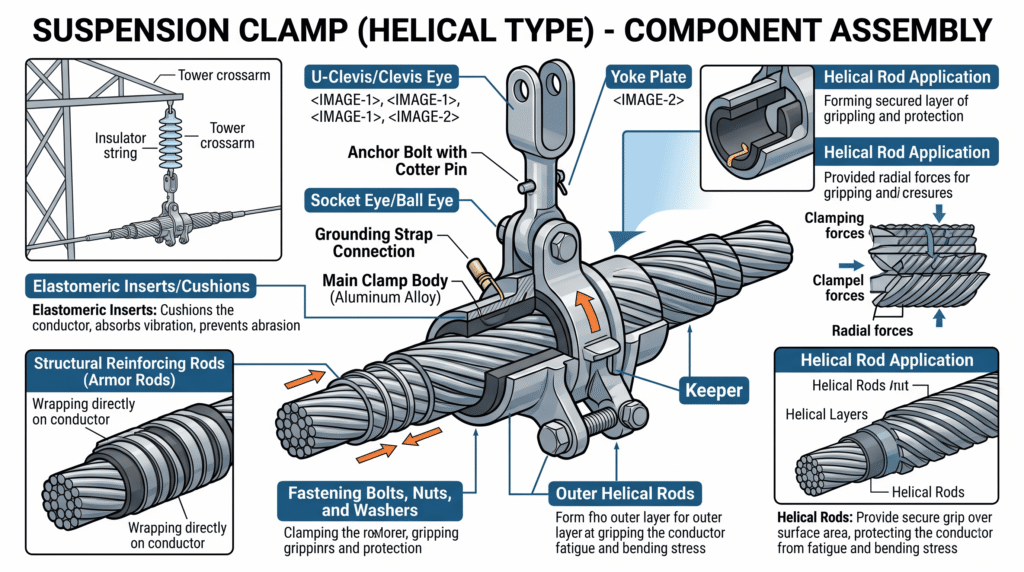
To perform reliably under immense and continuous stress, a suspension clamp must be engineered with absolute precision. While designs can vary based on the specific application—such as handling OPGW (Optical Ground Wire) or standard ACSR (Aluminum Conductor Steel Reinforced) cables—most premium suspension clamps share a common structural anatomy:
- The Main Body (Clamp Trough): This is the saddle or groove where the conductor rests. It is designed to perfectly match the diameter of the cable, ensuring a snug fit that distributes mechanical stress evenly without crushing the delicate internal strands of the wire.
- The Keeper: This is the top plate that secures the conductor inside the main body.
- U-Bolts and Nuts: These high-strength fasteners tighten the keeper against the main body, clamping the cable firmly in place. Proper torque is essential here to prevent the cable from slipping while avoiding over-compression.
- Connecting Hardware: Components such as clevis pins, cotter pins, and socket eyes are used to attach the entire clamp assembly securely to the insulator string hanging from the transmission tower.
Common Types of Suspension Clamps
Depending on the voltage of the line, the terrain, and the specific type of conductor used, engineers can choose between several specialized designs:
Envelope Type Clamps
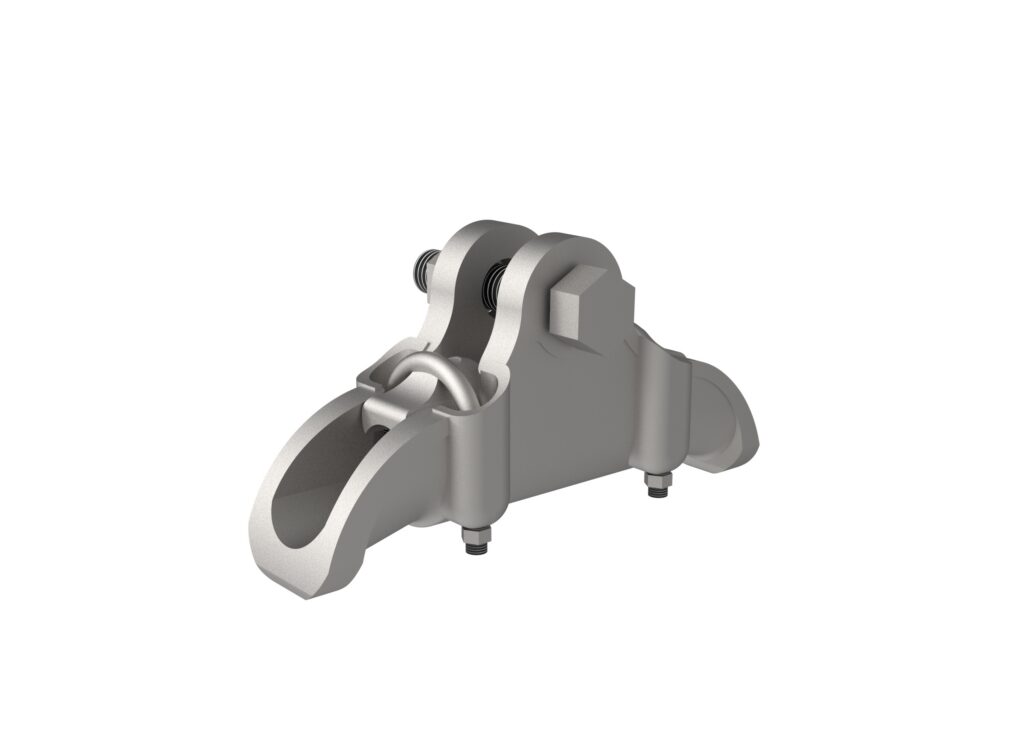
This is the most common configuration for standard transmission lines. The conductor is seated within a U-shaped trough and clamped down. It is a straightforward, highly effective, and easy-to-maintain design
Trunnion Type Clamps
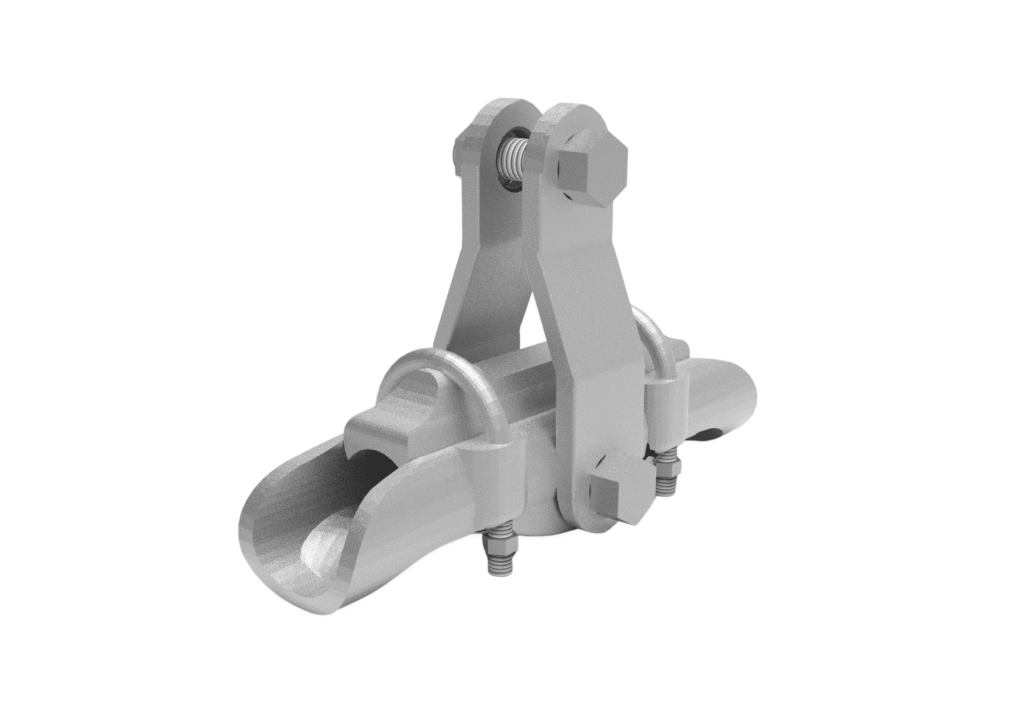
Designed for higher dynamic flexibility, trunnion clamps feature a pivot mechanism that allows the clamp body to swing freely. This design is exceptionally beneficial in areas prone to heavy crosswinds, as it drastically reduces the bending stress placed on the conductor.
AGS (Armor Grip Suspension) Clamps
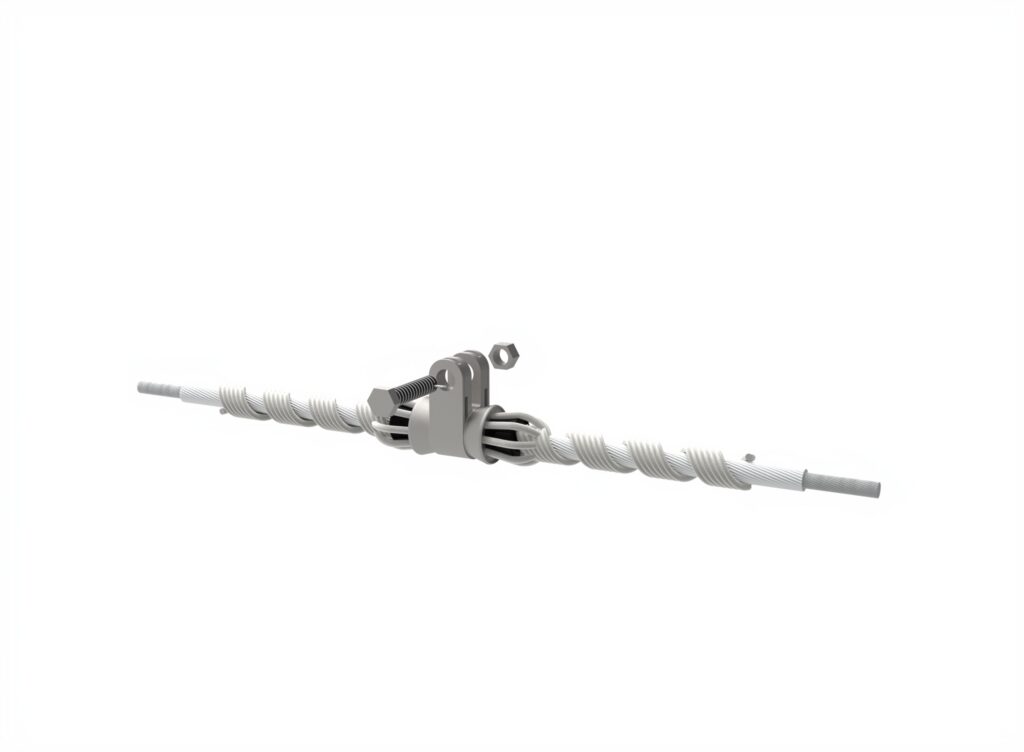
For ultra-high-voltage lines or fragile cables like fiber-optic ground wires, AGS clamps are the gold standard. They utilize preformed armor rods and a protective elastomer insert to completely cradle the cable. This spreads the compressive clamping force over a much larger surface area, virtually eliminating the risk of cable deformation.
Unyielding Durability: Material Selection
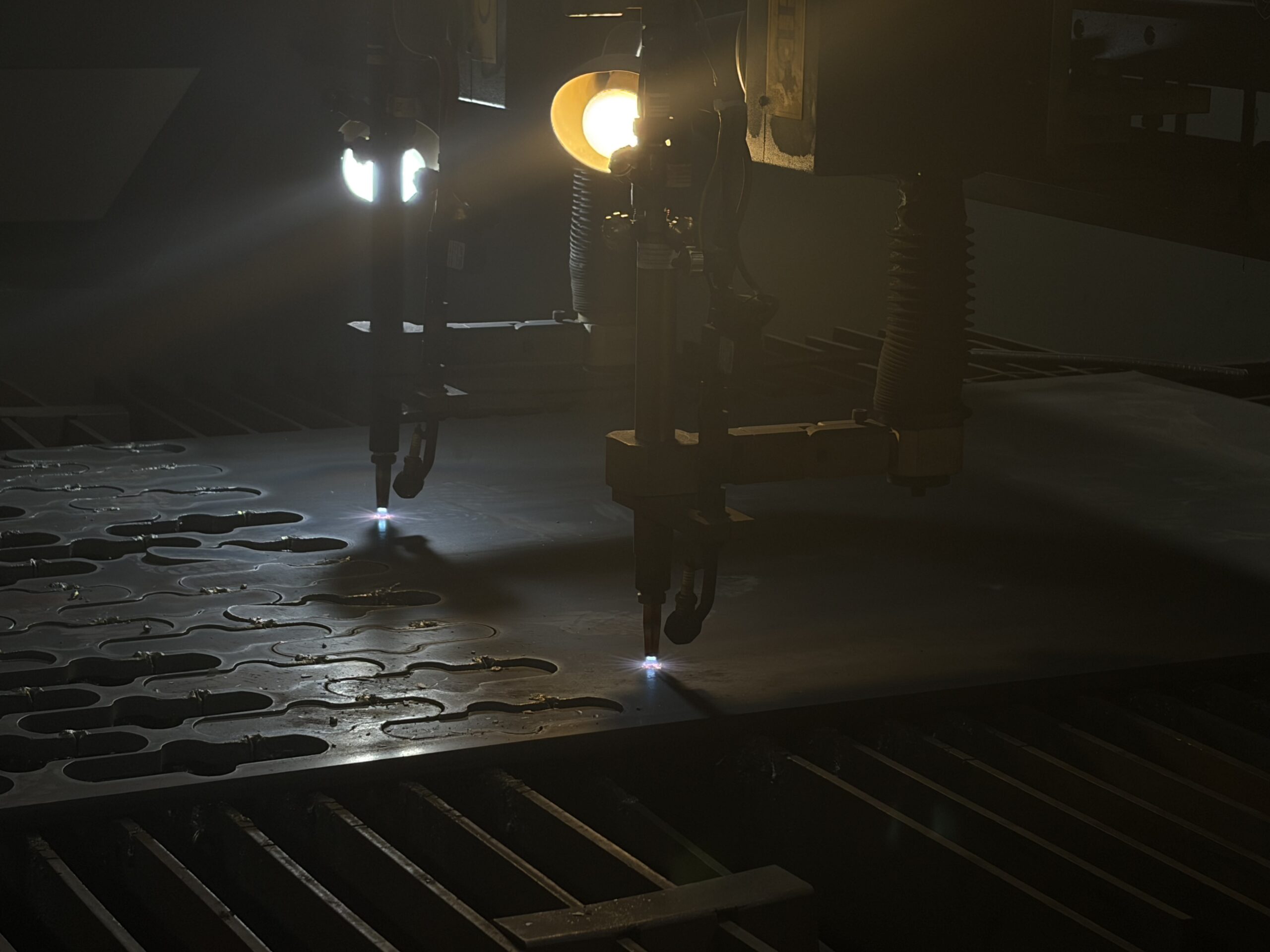
Overhead power lines are exposed to some of the harshest environments on earth, from scorching, humid coastlines to freezing, ice-prone mountainous regions. Therefore, material selection is a non-negotiable aspect of suspension clamp manufacturing.
- Aluminum Alloy: The main body and keeper are frequently cast from high-strength aluminum alloy. This material is incredibly lightweight, which reduces the overall load on the insulator string. Crucially, aluminum is non-magnetic, which minimizes hysteresis and eddy current losses, ensuring maximum efficiency in power transmission.
- Hot-Dip Galvanized Steel: The U-bolts, nuts, and load-bearing pins are typically forged from high-tensile steel. Through the hot-dip galvanization process, the steel is coated in a thick layer of zinc, providing an impenetrable barrier against rust and structural degradation caused by the elements.
Critical Functions and Engineering Benefits
Investing in top-tier suspension clamps directly translates to long-term grid reliability. Here is why this specific hardware is fundamental to overhead line engineering:
- Vertical Load Distribution: Conductors are incredibly heavy, especially over long, sweeping spans. Suspension clamps safely transfer this continuous vertical weight to the insulator string and the tower structure itself.
- Vibration Dampening: Constant wind causes high-frequency aeolian vibrations along power lines. A well-designed clamp acts as an articulated pivot point, working in tandem with armor rods and vibration dampers to absorb these kinetic shocks, preventing the cable from snapping due to metal fatigue.
- Flexibility During Unbalanced Loads: In the event of heavy ice build-up or a broken conductor in an adjacent span, a suspension clamp can swing to alleviate the sudden unbalanced longitudinal tension, protecting the rigid tower structure from dangerous twisting forces.
Secure Your Infrastructure with the Best Overhead Line Accessories
The integrity of an overhead transmission line is only as strong as its weakest link. From supporting heavy electrical conductors to weathering fierce environmental conditions over decades, the suspension clamp is a vital investment in the longevity and safety of any power grid. Choosing high-quality, precision-engineered hardware drastically reduces maintenance costs, prevents catastrophic grid failures, and ensures continuous, uninterrupted power delivery to communities and industries alike.
Are you looking for reliable, industry-grade overhead line accessories for your next electrical infrastructure project? Look no further. Equip your transmission lines with the unmatched durability, precision, and performance they deserve.
Visit hogntransjaya.com today to explore a comprehensive range of premium suspension clamps and other top-tier transmission hardware solutions. Let us partner with you to build a stronger, safer, and more resilient power network for the future.
